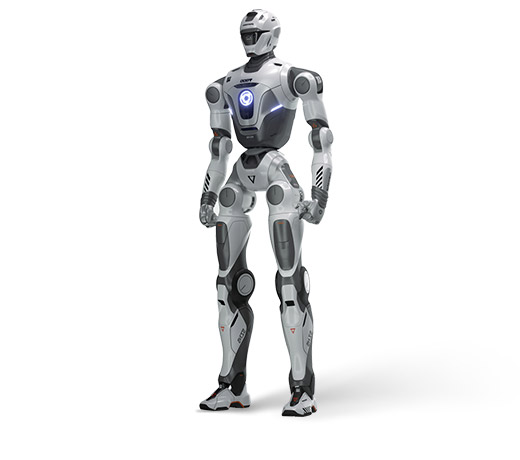
Three ENGINEAI T800 units cleared customs on 12 October and went straight onto the demo floor in Austin. They have been running two eight-hour shifts a day since, mostly carrying totes between a conveyor, a shelving bank and a packing table — the least glamorous work in robotics, and the only work that tells you anything useful.
What eight-hour shifts exposed
Nothing exploded. That is not the interesting part. The interesting part is the list of small things that only appear once a machine is asked to do the same task four hundred times:
- Floor transitions. A 12 mm expansion joint between two concrete slabs was enough to disturb the gait planner twice an hour. A 40 cm aluminium ramp solved it.
- Overhead lighting. The lab has a skylight. Between 15:40 and 16:20 the stereo cameras see a moving highlight band that occasionally reads as an obstacle. We re-aimed two fixtures and the false positives stopped.
- Human traffic. People do not walk in straight lines. The T800's planner is conservative by default, which reads as "polite but slow" on a busy floor. We widened two keep-out zones and let it take a more direct path.
What we changed before opening the floor
Three things, all of them cheap: a ramp at the joint, a five-minute pre-shift calibration routine that re-baselines the arm encoders, and a printed handover card at the packing station so staff know exactly where to stand when a tote is released.
The robot did not get smarter. The room got clearer instructions.
The demo floor is open to customers by appointment. Bring a tote, bring your own box, or bring a sample of whatever you actually need moved — a half-hour with your own payload is worth more than any specification sheet.
Every T800 we ship goes through the same bench routine before it leaves: 48 hours of cycling, a full joint torque sweep, and a documented handover with the engineer who signed it off.